If you’ve ever cut back poison ivy only to see it return a few weeks later, you’re not alone. It’s the most common problem We called about, and one of the most stubborn plants we deal with. The reason it keeps coming back is simple: the part of the plant that causes regrowth is the part you can’t see.
In this post, we’ll explain what’s happening under the soil, how to spot poison ivy, and how our 100% root and rhizome focused approach helps minimize regrowth.
What’s Happening Under the Soil
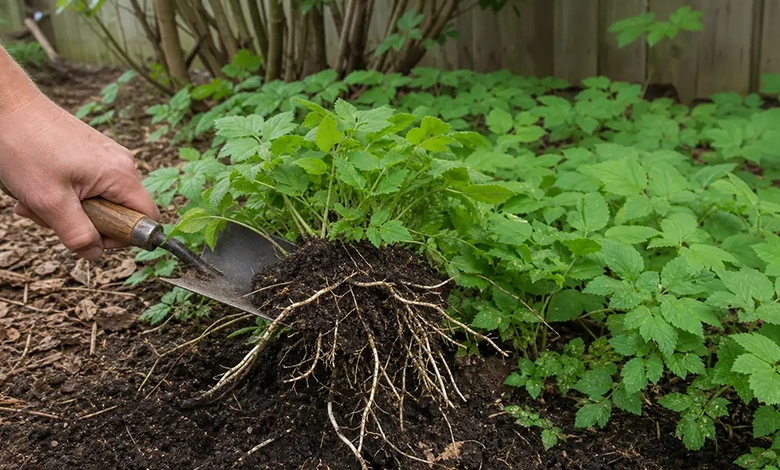
Poison ivy doesn’t only spread by seed. It spreads through roots and rhizomes, which are underground stems that run sideways through the soil and send up new shoots along the way. They can travel several feet from the main plant. When you mow, trim or pull just the leaves, the roots and rhizomes stay alive and push up fresh growth, sometimes in more places than before.
Pulling poison ivy from dry, hard soil makes things worse. The roots and rhizomes snap, and the pieces left behind can sprout again. We see this all the time in yards where homeowners have been fighting the same patch for years.
How We Spot Poison Ivy
Before We remove anything, We make sure it really is poison ivy. Here’s what we look for:
- Leaves in groups of three, with the middle leaf on a longer stem
- Leaves that can be shiny or dull, with smooth or slightly notched edges
- Reddish leaves in spring and bright red or orange leaves in fall
- Hairy, rope-like vines climbing trees, fences and stone walls
- Clusters of small whitish berries in late summer and fall
Why Our Approach Is 100% Root and Rhizome Focused
Cutting the leaves only buys you a few weeks. That’s why every poison ivy job we take on is 100% root and rhizome focused. We cut climbing vines at the base, loosen the soil, and follow the roots and rhizomes by hand, lifting them out slowly instead of yanking them. We like to work when the soil is moist, because roots and rhizomes come out more easily.
Large, older patches can have deep and tangled root and rhizome networks, so even careful work can leave a few small pieces behind. That’s normal. For bigger jobs, We recommend a follow-up visit so We can catch any new sprouts early, before they get established.
Safety Comes First
Every part of poison ivy contains urushiol, the oil that causes the itchy rash. It’s in the leaves, stems, vines and roots, and it stays active even on dead plants. We work in full protective gear, and we seal everything we remove in heavy-duty bags. We never burn poison ivy, because the oil travels in smoke and can harm your eyes, throat and lungs, and we never compost it. When we leave, there’s no pile of toxic brush waiting for your kids or pets to find.
When to Call Me
A few small plants can sometimes be handled on your own with the right protection. But we’d recommend call us if:
- The patch is large or has been growing for years
- Poison ivy is climbing your trees, fence or house
- It’s growing in stone walls or rocky soil
- You or someone in your family reacts badly to it
- It keeps coming back no matter what you try
Let Us Help You Take Back Your Yard
We provide poison ivy removal that’s 100% root and rhizome focused, serving the North Shore and surrounding areas within approximately a 15-mile radius. We deeply uproot roots and rhizomes to minimize regrowth, bag everything carefully, and keep you away from the oil completely.
Call us at (781) 790-3663 or email aletagrace@icloud.com for a free estimate.agrace@icloud.com for a free estimate.